
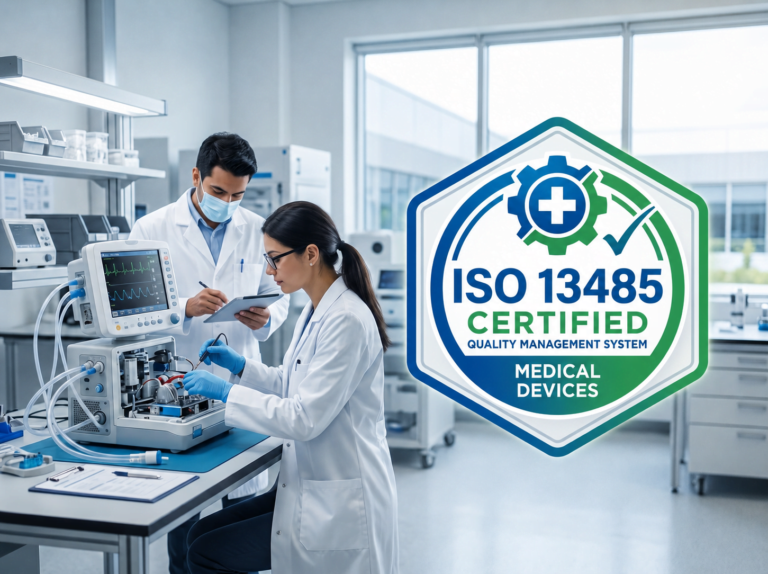
The medical device industry operates in one of the most highly regulated environments in the world. Manufacturers must ensure that their products are safe, effective, and consistently meet customer and regulatory requirements. This is where ISO 13485 medical devices certification becomes essential.
ISO 13485 medical devices is an internationally recognized Quality Management System (QMS) standard specifically designed for organizations involved in the design, production, installation, and servicing of medical devices. Achieving certification demonstrates a company’s commitment to quality, patient safety, and regulatory compliance.
What Is ISO 13485 Medical Devices Certification?
ISO 13485 medical devices certification is a globally accepted standard that establishes the requirements for a quality management system within the medical device sector. Developed by the International Organization for Standardization (ISO), the standard focuses on risk management, process control, product traceability, and regulatory compliance.
Unlike general quality standards, ISO 13485 is tailored specifically to organizations involved in medical device manufacturing and related services. It helps businesses create reliable systems that ensure products consistently meet customer and regulatory expectations.
Organizations that obtain ISO 13485 medical devices certification gain greater credibility in domestic and international markets while improving operational efficiency and product quality.
Why ISO 13485 Medical Devices Certification Is Important
The healthcare industry demands strict quality control because medical devices directly impact patient health and safety. Implementing ISO 13485 medical devices standards helps organizations establish robust processes that minimize risks and improve product reliability.
Key benefits include:
- Enhanced product quality and consistency
- Improved patient safety and risk management
- Greater compliance with international regulations
- Increased customer trust and market credibility
- Better operational efficiency and reduced errors
- Easier access to global healthcare markets
Many regulatory authorities worldwide recognize ISO 13485 medical devices certification as a critical component of compliance requirements, making it a valuable asset for manufacturers seeking international expansion.
Key Requirements of ISO 13485 Medical Devices
Organizations pursuing ISO 13485 medical devices certification must implement and maintain a comprehensive quality management system. Some of the key requirements include:
Quality Management System Documentation
The organization must establish documented procedures, quality policies, objectives, and records that support effective quality management practices.
Risk Management
Risk management is a core component of ISO 13485 medical devices compliance. Companies must identify, evaluate, and control risks throughout the product life-cycle.
Product Design and Development
Manufacturers must establish structured design and development processes to ensure products meet safety and performance requirements.
Supplier Management
Organizations must evaluate and monitor suppliers to ensure purchased materials and services consistently meet quality standards.
Corrective and Preventive Actions (CAPA)
The standard requires procedures to identify nonconformism, investigate root causes, and implement corrective actions to prevent recurrence.
Traceability and Record Control
Medical device manufacturers must maintain detailed records and product traceability to support regulatory compliance and product recalls if necessary.
Who Needs ISO 13485 Medical Devices Certification?
ISO 13485 medical devices certification is beneficial for a wide range of organizations operating within the healthcare supply chain, including:
- Medical device manufacturers
- Medical equipment suppliers
- Contract manufacturers
- Sterilization service providers
- Medical device distributors
- Healthcare technology companies
- Component and raw material suppliers
- Design and development organizations
Whether a company develops diagnostic equipment, surgical instruments, implants, or digital healthcare devices, ISO 13485 can help establish a strong quality framework.
ISO 13485 Medical Devices Certification Process
The certification process typically involves several structured steps.
Gap Analysis
An initial assessment identifies areas where existing processes do not meet ISO 13485 medical devices requirements.
System Development
Organizations create and implement policies, procedures, and documentation aligned with the standard.
Employee Training
Staff members receive training to understand quality management requirements and their responsibilities within the system.
Internal Audit
An internal audit evaluates system effectiveness and identifies opportunities for improvement before certification.
Certification Audit
An accredited certification body conducts a formal audit to verify compliance with ISO 13485 medical devices requirements.
Certification Issuance
Upon successful completion of the audit, the organization receives ISO 13485 certification.
Global Market Benefits of ISO 13485 Medical Devices
In today’s competitive healthcare industry, certification provides a significant advantage. Many international buyers, healthcare institutions, and regulatory agencies prefer working with organizations that maintain certified quality management systems.
Implementing ISO 13485 medical devices standards can help businesses:
- Enter new international markets
- Strengthen relationships with healthcare providers
- Improve regulatory approval processes
- Enhance product reliability and customer satisfaction
- Reduce operational risks and quality issues
- Build a strong reputation within the medical industry
As global healthcare regulations continue to evolve, organizations with ISO 13485 certification are better positioned to adapt and maintain compliance.
Conclusion
ISO 13485 medical devices certification is more than a regulatory requirement—it is a strategic investment in quality, safety, and business growth. By implementing a structured quality management system, organizations can improve operational performance, reduce risks, and demonstrate their commitment to delivering safe and reliable medical devices.
For medical device manufacturers and healthcare technology providers looking to expand globally, enhance customer trust, and achieve regulatory compliance, ISO 13485 medical devices certification remains one of the most valuable standards in the industry.